Maa Kali Defeating Raktabija Explained
The cosmic dance of creation, preservation, and destruction is vividly portrayed in Hindu mythology through the exploits of its diverse deities. Among these powerful narratives, the sacred story of Maa Kali Defeating Raktabija stands as a paramount tale of divine intervention, raw power, and uncompromising justice. It is a testament to the ultimate triumph of good over evil, showcasing the formidable aspect of the Divine Feminine when faced with insurmountable threats. This epic encounter, primarily chronicled in the Devi Mahatmya, reveals Kali as the fierce protector and ultimate destroyer of demonic forces, whose very presence strikes terror into the hearts of those who seek to disrupt cosmic order.
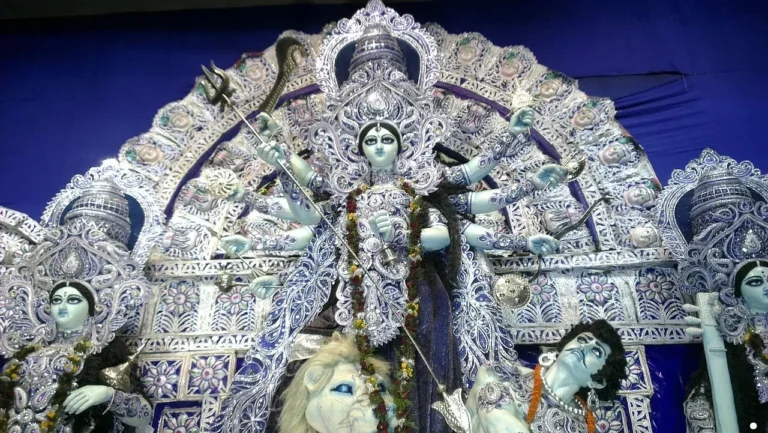
The legend unfolds during a period of intense turmoil, when the world was plagued by the relentless onslaught of powerful asuras (demons). The gods themselves, weakened and disempowered, turned to the supreme Goddess, Devi, for salvation. From her luminous essence emerged Mahishasura Mardini, Goddess Durga, who valiantly fought and defeated the buffalo demon Mahishasura. Yet, the struggle was far from over. A new, more insidious threat emerged in the form of Raktabija, a demon possessing a unique and terrifying boon that made him seemingly invincible. Understanding this profound narrative is crucial to appreciating the multifaceted nature of the divine, particularly the transformative power embodied by Goddess Kali.
The Menace of Raktabija and Durga’s Dilemma
The demon Raktabija, whose name literally translates to ‘blood-seed,’ was no ordinary adversary. He had obtained a boon from Lord Brahma that granted him an extraordinary ability: for every drop of blood that spilled from his body and touched the earth, another identical Raktabija demon would instantly spring forth. This formidable power rendered him virtually immortal on the battlefield. As Goddess Durga, with her retinue of goddesses and shaktis, engaged Raktabija in fierce combat, she quickly realized the terrifying implications of his boon. Each blow she struck, each wound inflicted, only multiplied her enemy, turning a single demon into a legion of identical, equally powerful foes. The battlefield became saturated with his blood, and soon, countless Raktabijas emerged, overwhelming the divine forces.
The situation grew dire. Durga, despite her immense power and divine arsenal, found herself in a seemingly unwinnable predicament. Her divine weapons, effective against other demons, proved futile against Raktabija’s self-replicating ability. The sheer volume of new demons threatened to engulf the entire cosmos, pushing the gods and the forces of dharma to the brink of despair. This moment of crisis called for a power beyond conventional warfare, a force capable of addressing the very source of Raktabija’s invincibility. It was at this critical juncture that the ferocious aspect of the Divine Mother, Maa Kali, was invoked, ready to unleash her unbridled fury to restore balance.
Maa Kali’s Emergence: A Force of Unstoppable Destruction
Witnessing the escalating chaos and the apparent futility of her efforts against Raktabija, Goddess Durga was filled with divine rage and determination. From her furrowed brow, a brilliant, terrifying light emanated, giving birth to a form unlike any seen before. This was Maa Kali, the dark goddess, the very embodiment of time and destruction. Her appearance was awe-inspiring and terrifying: dark skin, often depicted as blue or black, wild disheveled hair, a garland of skulls around her neck, a girdle of severed hands, and a long, lolling tongue stained with blood. Her eyes blazed with cosmic fury, and her laughter echoed like thunder, striking fear into the hearts of the demons.
Kali emerged fully armed, carrying a sword and a severed head, her powerful roars shaking the heavens and the earth. She was not merely an extension of Durga but a distinct, more ferocious manifestation, created specifically to annihilate the seemingly unconquerable Raktabija. Her mission was clear: to prevent a single drop of Raktabija’s blood from reaching the earth. This pivotal moment underscores the concept of the divine feminine’s ability to manifest in various forms, each suited to overcome specific challenges. The Devi Mahatmya beautifully narrates this dramatic birth and subsequent rampage of Kali, solidifying her role as a powerful protector.
The Strategic Annihilation: Maa Kali Defeating Raktabija
Maa Kali’s strategy to defeat Raktabija was as direct as it was terrifyingly effective. Unlike Durga, who aimed to wound and incapacitate, Kali’s objective was to consume. As Durga struck Raktabija, ensuring his blood began to spill, Kali moved with blinding speed and ferocity. She opened her cavernous mouth, extended her colossal tongue across the battlefield, and began to lick up every single drop of blood the moment it emerged from Raktabija’s wounds, preventing it from touching the earth. No sooner did a drop of blood appear than it was absorbed by Kali, thus preventing the multiplication of new demons.
With her tongue acting as a vast net, Kali then proceeded to devour the Raktabija clones that had already manifested, swallowing them whole along with their blood. The sound of her consuming the demons was described as thunderous, a terrifying symphony of destruction. As Durga continued to strike the original Raktabija, Kali meticulously ensured that no new demons could be born. One by one, the existing Raktabija clones were consumed, and the source of their endless regeneration was neutralized. Finally, with no more blood to spill and no more clones to generate, the original Raktabija demon was isolated, his unique boon rendered useless by Kali’s unparalleled might. This ultimate act of Maa Kali defeating Raktabija secured the victory for the divine forces.
Key Aspects of Kali’s Victory Over Raktabija:
- Unconventional Warfare: Kali employed a method that bypassed Raktabija’s boon, proving that conventional force was insufficient.
- Absolute Consumption: By consuming the blood and the clones, she stopped the cycle of regeneration completely.
- Fear as a Weapon: Her terrifying form and relentless fury instilled paralyzing fear in the demons, demoralizing them.
- Divine Complement: Kali acted as the necessary complement to Durga’s power, handling the aspect of destruction that Durga’s benevolent form could not.
- Symbol of Time and Change: Her victory signifies that even the most formidable obstacles can be overcome by the transformative, destructive power of time itself.
The legend of Raktabija and his defeat by Kali remains one of the most iconic tales in Hindu mythology, underscoring the absolute nature of divine power when called upon to restore cosmic balance. For a deeper understanding of Goddess Kali, her various manifestations, and her profound symbolism, the Britannica entry on Kali provides excellent insights into her cultural and religious significance.
Symbolism and Enduring Legacy of Maa Kali Defeating Raktabija
The narrative of Maa Kali Defeating Raktabija is rich with profound symbolism that transcends the literal battle. Raktabija represents the tenacious nature of evil, negative tendencies, and ego (ahankara) within each individual. Just as a single negative thought or desire, if nurtured, can multiply and overwhelm a person’s inner peace, so too did Raktabija’s blood create an endless army of demons. Kali, in this context, symbolizes the inner strength and transformative power required to confront and utterly eradicate these deeply rooted negativities. She does not merely suppress them; she consumes them, preventing their regeneration and ensuring their complete destruction.
Kali’s dark complexion is often interpreted as representing the void, the ultimate reality from which everything emerges and into which everything dissolves. Her nakedness signifies her freedom from the illusions of the material world, her unadorned truth. The garland of skulls she wears symbolizes her mastery over time and death, reminding us of the impermanence of physical existence. Her lolling tongue often represents her insatiable hunger for truth and her role in devouring ignorance. She is the fierce aspect of the divine mother who, out of boundless compassion, destroys evil to protect her devotees, even if her methods appear terrifying.
Her legacy endures in numerous ways. She is revered as a powerful goddess who grants liberation, courage, and protection from all forms of evil. Devotees turn to her when facing seemingly insurmountable obstacles, seeking her strength to overcome their inner and outer demons. The story serves as a reminder that destructive forces are sometimes necessary for creation and preservation. Just as a surgeon must cut to heal, Kali’s destructive power is ultimately aimed at restoring harmony and protecting righteousness (dharma).
In contemporary spirituality, Kali’s iconography continues to inspire conversations about feminine power, embracing one’s shadow self, and the courage to face uncomfortable truths. She is a reminder that strength can come in many forms, some of which may challenge conventional notions of beauty or benevolence. Her victory over Raktabija cemented her place as a formidable and essential deity within the Hindu pantheon, a goddess whose fierce love purifies and protects.
The sacred account of Maa Kali defeating Raktabija is far more than a mythological tale; it is a profound lesson in the nature of divine justice and the ultimate power of the Goddess. It illustrates that when conventional methods fail against an unrelenting evil, a higher, more potent force emerges to restore cosmic balance. Kali’s emergence was not an act of random fury but a strategic and compassionate response to an existential threat. Her unyielding resolve and terrifying form allowed her to accomplish what others could not, proving that true power lies in adaptability and the courage to confront darkness head-on.
Her story continues to resonate, inspiring devotees to confront their own internal ‘Raktabijas’—the multiplying negativities and egoistic tendencies that impede spiritual growth. Embracing the fierce wisdom embodied by Maa Kali offers a path to liberation and strength in the face of life’s greatest challenges. If you seek to understand the depths of divine power and the unwavering protective nature of the Great Goddess, delve deeper into the legends surrounding Goddess Kali and draw inspiration from her timeless victory. Allow the powerful narrative of Maa Kali Defeating Raktabija to empower your journey towards inner strength and profound transformation.
Frequently Asked Questions
Q1. Who was Raktabija and what was his unique boon?
Raktabija was a powerful demon whose name means ‘blood-seed.’ He possessed a unique boon from Lord Brahma: for every drop of blood that spilled from his body and touched the earth, another identical Raktabija demon would instantly spring forth. This extraordinary ability made him seemingly invincible on the battlefield, as every wound inflicted only multiplied his forces.
Q2. Why did Goddess Durga need Maa Kali’s help to defeat Raktabija?
Goddess Durga, despite her immense power, found herself in a dire predicament because Raktabija’s boon meant that every blow she struck only created more demons. Her conventional weapons were ineffective against his self-replicating ability, as the battlefield quickly became overwhelmed with his clones. The situation called for a unique, absolute power that could prevent his blood from reaching the earth, a task Maa Kali was specifically manifested to perform.
Q3. How did Maa Kali emerge to confront Raktabija?
Maa Kali emerged from the furrowed brow of Goddess Durga, an embodiment of divine rage, determination, and ultimate destruction. Her appearance was terrifying, characterized by dark skin, wild disheveled hair, a garland of skulls, a girdle of severed hands, and a long, blood-stained tongue. She was a distinct, more ferocious manifestation created specifically to annihilate Raktabija and restore cosmic balance.
Q4. What was Maa Kali’s unique strategy to defeat Raktabija?
Maa Kali’s strategy was direct and terrifyingly effective: consumption. As Goddess Durga continued to strike Raktabija, Kali extended her colossal tongue across the battlefield, meticulously licking up every single drop of blood the moment it emerged from his wounds, preventing any new demons from forming. She also proceeded to devour any existing Raktabija clones, neutralizing his regeneration ability and ultimately isolating the original demon for his final defeat.
Q5. What is the main symbolism behind Maa Kali’s victory over Raktabija?
Raktabija symbolizes the tenacious nature of evil, negative tendencies, and ego (ahankara) within each individual, which, if nurtured, can multiply and overwhelm. Kali, in this context, represents the inner strength and transformative power required to confront and utterly eradicate these deeply rooted negativities. Her victory signifies not just suppression, but complete consumption, preventing their regeneration and ensuring their absolute destruction to achieve liberation and spiritual growth.