Divine Protection Lord Vishnu Avatars
Lord Vishnu, one of the principal deities in Hinduism, is revered as the Preserver of the universe. His profound role extends beyond mere cosmic maintenance; it encompasses the active safeguarding of creation from destructive forces. Central to this divine guardianship is the concept of Lord Vishnu Avatars – his descents or incarnations onto Earth. These appearances are not arbitrary; they are meticulously orchestrated acts of divine intervention, each designed to restore balance, uphold dharma, and protect the righteous whenever evil threatens to overwhelm the world. The narratives surrounding these avatars form a cornerstone of Hindu mythology, offering profound insights into the cyclical nature of existence and the unwavering commitment of the divine to its creation. From ancient scriptures to contemporary understanding, the question of why Lord Vishnu takes different avatars resonates deeply with seekers of spiritual knowledge, revealing a complex tapestry of cosmic law and compassionate guardianship.
Understanding Why Lord Vishnu Takes Avatars
The foundational scripture for understanding Vishnu’s incarnations is the Bhagavad Gita, where Lord Krishna (himself an avatar of Vishnu) famously states: "Whenever there is a decline in righteousness and an increase in unrighteousness, O Arjuna, I manifest Myself." This verse encapsulates the very essence of why Lord Vishnu Avatars appear throughout various epochs. The universe, in Hindu cosmology, is not a static entity but a dynamic interplay of forces, constantly tending towards either dharma (righteousness, moral order, cosmic law) or adharma (unrighteousness, chaos). When adharma gains significant power, leading to widespread suffering, injustice, and a deviation from the natural order, the cosmic balance is threatened. It is at these critical junctures that Lord Vishnu, as the supreme preserver, intervenes.
His interventions are multi-faceted. They are not merely acts of destruction against evil forces; they are also acts of teaching, guidance, and the re-establishment of moral principles. Each avatar brings a unique lesson, a specific set of virtues, and a particular method for resolving the prevailing crisis. For example, some avatars might demonstrate the power of selfless duty, others the importance of wisdom, and yet others the ferocity required to defend the innocent. These divine descents ensure the continuity of life, the protection of saints, and the ultimate preservation of the universal order. Without such divine intervention, the forces of chaos would eventually consume creation, disrupting the intricate web of existence that Vishnu is sworn to maintain. This unwavering commitment underscores the profound depth of Vishnu’s role in the cosmic drama.
Lord Vishnu Avatars: Guardians of Dharma
The concept of dharma is central to Hindu philosophy and serves as the primary impetus for Lord Vishnu Avatars. Dharma is more than just religion; it encompasses righteousness, ethical conduct, moral law, and the natural order of the universe. It is the very fabric that holds society and the cosmos together. When humans, or even powerful demonic entities, deviate from dharma, they create an imbalance that can lead to untold suffering and the breakdown of universal order. Vishnu’s incarnations are thus acts of cosmic restorative justice, intended to realign creation with its fundamental principles.
These divine descents are intricately linked to the idea of preservation. Vishnu preserves not just physical life but also the spiritual and moral integrity of the cosmos. He manifests when the sanctity of creation is endangered, be it by an arrogant king, a powerful demon, or a widespread decline in virtue. Each avatar serves as a divine instrument to address a specific threat to dharma, demonstrating that even in the darkest of times, divine protection is always available. The stories of Vishnu’s avatars are therefore profound allegories that reinforce faith in the ultimate triumph of good over evil. They teach humanity about the enduring nature of righteousness and the consequences of adharma, guiding individuals towards a path of ethical living and spiritual growth. The meticulous planning behind each incarnation highlights Vishnu’s foresight and his unwavering commitment to maintaining the delicate cosmic balance.
The Varied Manifestations of Lord Vishnu Avatars
The necessity for Lord Vishnu Avatars to assume diverse forms arises from the equally diverse nature of the threats they face and the specific purposes they need to fulfill. A single, unchanging form would be insufficient to address the myriad challenges that plague humanity and the cosmic realms across different ages, or Yugas. This adaptability is best exemplified by the Dashavatara, the ten principal avatars of Vishnu, each tailored to a particular era and a unique crisis. These forms range from aquatic creatures to half-human, half-animal beings, and finally to fully human forms, symbolizing an evolutionary progression and a responsiveness to the changing nature of evil.
Consider the early avatars: Matsya, the fish, saved humanity from a great deluge, signifying preservation amidst natural cataclysm. Kurma, the tortoise, supported the churning of the cosmic ocean, essential for obtaining divine nectar. Varaha, the boar, rescued the Earth goddess from the depths of the ocean, representing divine strength against primordial chaos. Narasimha, the man-lion, emerged to defeat a demon who had a boon against being killed by man or beast, showcasing a unique, hybrid form of divine intervention. Vamana, the dwarf, humbled an arrogant king through wisdom and cosmic power. Later, Parashurama embodied warrior justice, while Rama established the ideal rule of dharma, and Krishna delivered profound spiritual teachings and guided the Mahabharata war. The Buddha avatar, within Vaishnava tradition, represents the deluding of demons away from Vedic rites, or the teaching of compassion. Finally, Kalki, the future avatar, is prophesied to appear at the end of the current age (Kali Yuga) to purify the world and usher in a new era of righteousness. This spectrum of forms demonstrates that Vishnu’s mercy and power know no bounds, always adapting to the needs of creation.
- Matsya: The fish, who saved Manu (the progenitor of mankind) and the Vedas from a great flood.
- Kurma: The tortoise, who provided support for the Mandara mountain during the Samudra manthan (churning of the cosmic ocean).
- Varaha: The boar, who lifted the Earth from the cosmic ocean after it was submerged by the demon Hiranyaksha.
- Narasimha: The man-lion, who vanquished the demon Hiranyakashipu, who could not be killed by man or beast, day or night.
- Vamana: The dwarf Brahmin, who tricked the demon king Bali into surrendering all three worlds.
- Parashurama: The warrior Brahmin, who cleansed the Earth of corrupt Kshatriya rulers twenty-one times.
- Rama: The ideal king, central to the epic Ramayana, who embodied dharma and defeated the demon king Ravana.
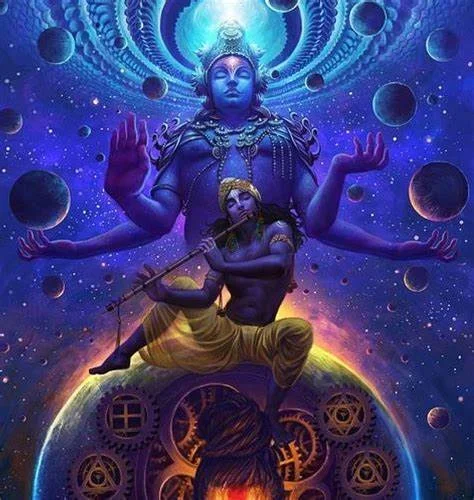
- Krishna: The divine cowherd, charioteer, and philosopher of the Mahabharata, who revealed the Bhagavad Gita.
- Buddha: In some Vaishnava traditions, seen as an avatar who appeared to delude demons or preach non-violence.
- Kalki: The future avatar, prophesied to appear at the end of the Kali Yuga to destroy evil and restore dharma.
The Metropolitan Museum of Art showcases various depictions of Vishnu and his avatars, highlighting their significant cultural impact.
The Enduring Legacy of Lord Vishnu Avatars
The stories of Lord Vishnu Avatars are more than just mythological tales; they are foundational narratives that have profoundly shaped Hindu mythology, culture, and ethics for millennia. They serve as potent reminders of the eternal struggle between good and evil, and the ultimate triumph of dharma. Through these narratives, generations have learned about the importance of righteousness, compassion, courage, and unwavering faith. The avatars provide role models for humanity, demonstrating how to live a life aligned with cosmic principles, even in the face of immense adversity.
Beyond the moral lessons, the accounts of divine intervention offer profound spiritual comfort. They reassure devotees that the divine is not distant or indifferent but is actively involved in the welfare of creation. This belief fosters a deep sense of hope and resilience, knowing that whenever darkness looms, Vishnu will manifest to protect his devotees and restore order. The enduring popularity of the Dashavatara cycles in art, literature, festivals, and daily worship attests to their timeless relevance. They connect individuals to a rich spiritual heritage, inspiring devotion (bhakti) and guiding them towards a deeper understanding of their place within the universal order. The teachings and stories of Vishnu continue to inspire millions, reflecting the dynamic, compassionate, and ever-present nature of the divine.
In conclusion, the intricate tapestry of Lord Vishnu Avatars reveals a profound divine strategy designed to protect Earth and its inhabitants. These incarnations are not random occurrences but calculated acts of divine intervention, each perfectly suited to the specific challenges of its era. From safeguarding the delicate cosmic balance to annihilating malevolent forces and re-establishing dharma, Vishnu’s descents underscore his unwavering commitment as the Preserver. They teach us that righteousness will ultimately prevail and that divine mercy is always accessible, even in humanity’s darkest hours. By embodying various forms, Vishnu ensures that the universal order is maintained, lessons are taught, and the path to spiritual liberation remains clear. The stories of Lord Vishnu Avatars continue to inspire faith, uphold moral values, and offer a timeless narrative of hope and preservation for all of creation.
To delve deeper into the rich spiritual wisdom and epic tales surrounding Lord Vishnu Avatars, explore authoritative texts and scholarly interpretations that further illuminate these divine manifestations and their enduring significance.
Frequently Asked Questions
Q1. Why does Lord Vishnu take avatars?
Lord Vishnu takes avatars to restore cosmic balance whenever unrighteousness (adharma) prevails over righteousness (dharma). As stated in the Bhagavad Gita, he manifests to protect the righteous, annihilate evil forces, and re-establish moral principles, ensuring the continuity of life and universal order. These divine descents are meticulously orchestrated interventions.
Q2. What is the concept of ‘dharma’ in relation to Vishnu’s avatars?
Dharma is central to Vishnu’s avatars, encompassing righteousness, ethical conduct, and the natural order of the universe. Vishnu incarnates when dharma is threatened by humans or demonic entities, acting as cosmic restorative justice. His avatars realign creation with its fundamental principles, preserving spiritual and moral integrity.
Q3. What are the Dashavatara?
The Dashavatara are the ten principal avatars of Lord Vishnu, each tailored to a specific era and crisis. They include Matsya, Kurma, Varaha, Narasimha, Vamana, Parashurama, Rama, Krishna, Buddha (in some traditions), and Kalki. These varied manifestations symbolize Vishnu’s adaptability to address diverse threats.
Q4. How do Vishnu’s avatars demonstrate divine protection?
Vishnu’s avatars demonstrate divine protection by actively intervening when creation faces existential threats. They safeguard humanity, uphold dharma, and vanquish malevolent forces that disrupt cosmic balance. Each avatar employs unique methods and forms—from saving life from floods as Matsya to defeating powerful demons as Narasimha—to ensure the preservation of the universe and its inhabitants.
Q5. What is the enduring legacy of Lord Vishnu’s avatars?
The legacy of Lord Vishnu’s avatars is profound, shaping Hindu mythology, culture, and ethics. They serve as timeless narratives of good triumphing over evil, offering moral lessons on righteousness, compassion, and faith. These stories provide spiritual comfort, inspiring devotion and guiding individuals towards an ethical life and a deeper understanding of the divine’s active involvement in the world.