Exploring Vishnu’s Avatars Insights
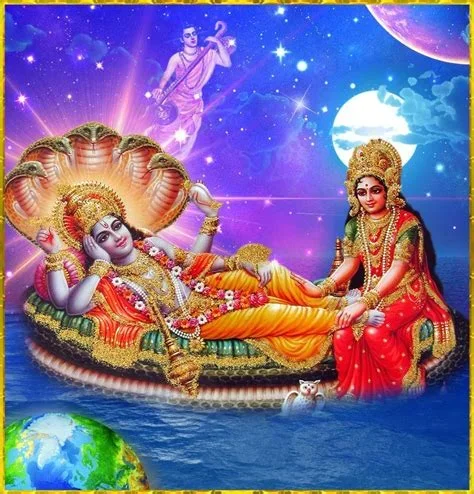
Vishnu’s Avatars hold a central place within the tapestry of Hindu cosmology, serving as divine interventions that restore balance and moral order throughout cosmic cycles. When scholars, artists, and devotees first consult ancient texts, the narrative of these incarnations—often referred to collectively as the Dashavatara—provides an accessible gateway into the profound philosophy of divine play, or lila. By exploring how these ten forms of Vishnu’s Avatars are described, celebrated, and manifested across time and cultures, we not only deepen our understanding of Hindu tradition but also gain insight into how mythology shapes identity, art, and ethics in contemporary societies.
Origins in the Vedic Lore
The earliest mentions of Vishnu appear in the Rig Veda, where he is invoked as a guardian of cosmic order, or rta. However, it is in later Puranic literature that the concept of an avatar—as a deliberate descent of the divine to the earthly realm—takes full corporate form. Scholars agree that the notion mirrors the Proto-Indo European idea of the hero’s descent, but here, Vishnu’s manifestations are meticulously prescribed in the Bhagavata Purana, providing a structured list of his ten incarnations. These are set against the backdrop of dynastic epics like the Mahabharata, where avatars act as agents of divine justice.
The Dashavatara Tradition
At the heart of Vishnu’s story lies the inscribed sequence known as the Dashavatara, translated as “ten avatars.” Each form addresses specific cosmic crises: from rescuing humanity in the flood through the fish incarnation, to erasing the arrogance of the demon king Hiranyakashipu via his lion‑tiger form. Below is a quick list of the standard versions, along with context for each:
- 1️⃣ Matsya the fish, averting the fall of the world to water.
- 2️⃣ Kurma the tortoise, supporting the churning of the cosmic ocean.
- 3️⃣ Varaha the boar, lifting Earth from the primordial waters.
- 4️⃣ Vishnu in Narayana form, the ordinary god embodiment.
- 5️⃣ Narasimha the half‑human, half‑tiger, killing Hiranyakashipu.
- 6️⃣ Vamana the dwarf, subduing the greedy empire of Bali.
- 7️⃣ Parashurama the warrior, cleansing society of oppression.
- 8️⃣ Rama the warrior prince, mentioned in the Ramayana epic.
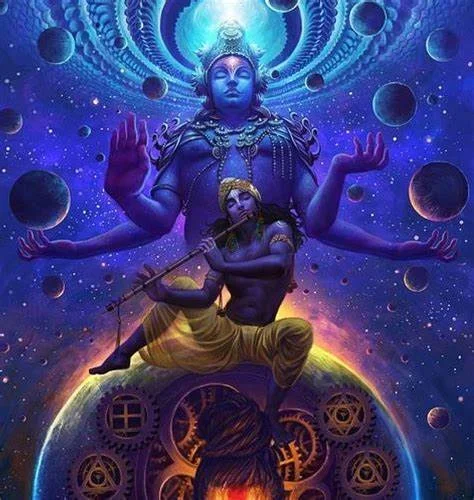
- 9️⃣ Krishna the divine cowherd, guiding the Mahabharata and chivalry.
- 🔟 Buddha (through certain traditions), ensuring compassion in humanity’s evolution.
While this listing is commonly accepted, regional traditions sometimes add or omit certain incarnations, illustrating the fluid nature of myth where each society adapts the cosmology to its values.
Iconography Across the Ages
Visual representations of each avatar have evolved dramatically through centuries of iconographic practice. Early Vedic art focuses on abstract geometric forms, whereas post‑classical temple sculptures, particularly in the Dravidian and Gupta traditions, render the avatars in dynamic, expressive poses. Scholars studying art history note that the iconography often mirrors the philosophical attributes of each incarnation—Matsya’s fish fins, Varaha’s boar snout, or Krishna’s playful flute—providing a strong symbolic language that communicates cosmic moral narratives without reliance on textual descriptions.
Architecturally, temple plans are arranged to guide devotees through a metaphysical journey: beginning at a base that symbolizes the world axis, visitors encounter Murti (deities) representing each avatar clan. The design subtly encourages an embodied realization of the avatars’ larger moral functions, aligning the act of worship with the narrative of redemption.
Cultural Influence and Worship
Beyond temples, Vishnu’s Avatars permeate everyday life, influencing literature, dance, and even modern media. Classical Sanskrit plays like Kalidasa’s Abhijñānaśākuntalam weave Krishna’s disguises into dramatic dialogues, while Chaitanya Mahaprabhu’s 16th‑century bhakti poetry re‑imagines Krishna as a direct source of divine love. In contemporary times, festivals such as Janmashtami (celebrating Krishna’s birth) and Rama Navami showcase performance arts, echoing the avatars’ stories and teaching current moral dilemmas through reenactments.
Modern scholarship often examines the avatars through the lens of social change theory. When Mahatma Gandhi articulated his vision of “Non‑violent Self‑Sacrifice,” many commentators noted striking parallels in the avatar narrative where self‑less avatars combat oppression. The avatars thus remain a living tradition, guiding collective action through spiritualized models of resistance.
Conclusion – Embrace the Divine Journey
In studying Vishnu’s Avatars, we witness a profound intertwining of theology, art, and social consciousness. Each incarnation not only narrates cosmic restoration but also unfolds a blueprint for ethical living that resonates across epochs. For scholars, devotees, and curious readers alike, the avatars invite a heart‑opening exploration of how divine agency informs human purpose.
Frequently Asked Questions
Q1. What are Vishnu’s Avatars?
Vishnu’s Avatars are divine manifestations that descend to the earthly realm to restore cosmic order and righteousness. They appear in the Dashavatara list, encompassing ten distinct forms ranging from a fish to a human-tiger hybrid. Each avatar addresses specific moral or cosmic crises, illustrating the principle of divine intervention in Hindu thought.
Q2. Why are there ten avatars in the Dashavatara?
The Dashavatara sequence emerged to provide a structured narrative of how the divine combats decline, invites renewal, and sets moral exemplars across generations. The number ten symbolizes completeness and cyclic completeness in Vedic cosmology. Each incarnation represents a progressive lesson, from basic survival to complex ethical dilemmas.
Q3. Which avatar is considered Buddha in some traditions?
In certain Vaishnavite traditions, Buddha is regarded as a ninth avatar of Vishnu, exemplifying the spiritual wisdom necessary for humanity’s evolution. This inclusion reflects a syncretic view that embraces broader religious teachings as part of the divine plan.
Q4. How are avatars represented in art and temple architecture?
Iconography varies from abstract Vedic symbols to detailed sculptures in Dravidian and Gupta styles. Temples often integrate sequential portrayal of avatars in corridors, encouraging devotees to journey symbolically through divine actions. Artistic motifs such as Matsya’s fins or Krishna’s flute become rich symbolic language.
Q5. How are Vishnu’s Avatars celebrated in modern culture?
Festivals like Janmashtami and Rama Navami dramatize avatars through dance, theater, and media adaptations. Contemporary scholars connect avatar narratives with social reform movements, inspiring compassion and resistance to injustice in modern society.