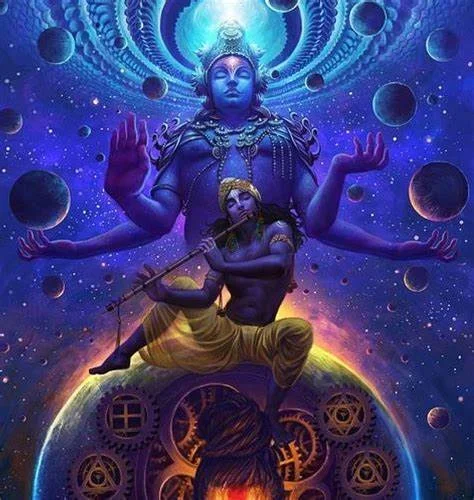
Moksha Meaning in Hindu Philosophy
The term Meaning of Moksha in Hindu Philosophy is central to understanding the ultimate goals of many Hindu traditions. From the earliest Vedic hymns to contemporary commentaries, Moksha—a Sanskrit word translating roughly to “liberation” or “release”—is viewed as the state of freedom from the endless cycle of birth, death, and rebirth known as samsara. Yet the concept is layered, nuanced, and varies across schools such as Vedanta, Yoga, and Jainism. This article explores the philosophical roots, scriptural references, and practical implications of Moksha in Hindu thought, helping readers grasp its true spiritual depth.
Historical Context: Moksha in the Vedas
In the earliest Vedic texts, the idea of liberation appears indirectly through hymns that praise the divine and seek ethical conduct. The Vedas emphasize duty (dharma) and knowledge (jnana) as pathways to a better life, implicitly addressing the desire to transcend the material realm. Though an explicit concept of Moksha appears more clearly in later Upanishadic literature, the Vedas laid the groundwork by stressing the importance of aligning one’s actions with universal principles.
Upanishadic Definition: Knowledge as Liberation
In the Upanishads, Moksha is often described as the realization of the self’s true nature—essentially recognizing one’s unity with Brahman, the ultimate reality. The Upanishad known as the Prashna states, “He who knows Brahman … is liberated from all births.” Here, knowledge (jnana) replaces mere ritual. Moksha, therefore, is not a reward but an inherent truth uncovered through disciplined inquiry. The Upanishadic view posits that the self (atman) is identical to Brahman; the perception of separation is ignorance (avidya).
Moksha Through the Lens of the Bhagavad Gita
The Bhagavad Gita offers practical guidance, linking Moksha to duty (karma) and devotion (bhakti). In Chapter 4, verse 7, Krishna declares, “When ignorance is at its peak … I appear,” telling Arjuna that the divine selfself‑satisfying forces work to help seekers reach liberation. His teachings combine the paths of devotion, knowledge, and disciplined action, emphasizing that all are valid routes when performed with unwavering commitment and renunciation of personal desire.
Moksha Across Hindu Schools
Different philosophical traditions interpret Moksha’s attainment differently:
- Vedanta: Moksha is the self‑realization of atman with Brahman; liberation is sustainable after death.
- Sankhya‑Yoga: Sees Moksha as the discernment of pure consciousness (purusha) from material reality (prakriti).
- Theravada Buddhism: While not part of Hinduism, it outlines an analogical path (nirvana) highlighting shared concepts.
- Shaivism & Vaishnavism: Emphasize devotion to Shiva or Vishnu as means to transcend samsara.
Practical Steps Toward Moksha Today
While Moksha may appear abstract, many modern practitioners adopt concrete practices:
- Mindful Meditation: Regular meditation helps quiet the mind and fosters self‑awareness.
- Study of Scriptures: Engaging with texts such as the Upanishads and Bhagavad Gita cultivates knowledge.
- Ethical Living: Following dharma—truth, nonviolence, compassion—aligns daily actions with spiritual growth.
- Service (Seva): Selfless service diminishes ego and fosters communal harmony.
- Detachment: Practicing controlled detachment from material desires reduces attachment, a core cause of samsara.
Moksha’s Modern Relevance
In an era of rapid technology and societal change, many find the quest for Moksha offers a counterbalance to consumerism and instant gratification. The state of liberation encourages a focus on inner contentment over external acquisition, providing a meaningful framework for psychological well‑being. Contemporary scholars such as Dr. Aniruddha Bose (University of Chicago) conduct comparative studies tying ancient liberation concepts to modern mindfulness practice, demonstrating their enduring significance.
Conclusion & Call to Action
Understanding the Meaning of Moksha in Hindu Philosophy reveals it as a profound journey toward self‑realization, anchored in knowledge, devotion, and ethical living. Whether you’re studying for academic insight or pursuing personal growth, the principles of Moksha invite continuous reflection and practice. Embrace the teachings, integrate mindful living into your daily routine, and awaken to the timeless truth that liberation is not a far‑off fantasy but a present reality waiting to be discovered.
Ready to dive deeper? Subscribe to our newsletter for weekly articles on ancient philosophies, practical guides, and expert interviews that help you unlock inner freedom. Stay inspired and keep exploring!
Frequently Asked Questions
Q1. What is Moksha?
Moksha is the liberation from the endless cycle of birth, death, and rebirth (samsara) in Hindu philosophy, achieved through self‑knowledge and devotion to the divine.
Q2. How does the concept of Moksha vary across Hindu schools?
Vedanta sees Moksha as union of atman with Brahman, Sankhya‑Yoga emphasizes discernment between purusha and prakriti, and Shaivism or Vaishnavism focuses on devotion to Lord Shiva or Vishnu to escape samsara.
Q3. What role does knowledge (jnana) play in attaining Moksha according to the Upanishads?
The Upanishads teach that knowing the true nature of the self and its identity with Brahman removes ignorance, the root of bondage, thereby freeing one from all births.
Q4. How does the Bhagavad Gita guide seekers on the path to Moksha?
Gita combines the paths of karma, bhakti, and jnana, urging action without attachment, devotion, and self‑inquiry to dissolve ignorance and reach liberation.
Q5. What practical steps can I take today to move toward Moksha?
Practice mindful meditation, study the Upanishads or Gita, live ethically, serve selflessly, and cultivate detachment from material cravings to gradually reduce bondage.